


not featured
2026-08-13
8/13/2026
Mortgage
published
.jpg)
What to Know Before Buying a Home in a Flood Zone in Arkansas
Buying a home in Harrison, Berryville, Eureka Springs, or Huntsville carries a higher risk of flooding than in other parts of Arkansas, and some homebuyers may not realize this until they apply for a mortgage.
The Ozark Mountains are vulnerable to flash flooding, and local waterways such as the Buffalo National River, Kings River, and White River can rise quickly after heavy rain, putting nearby homes in Harrison, Berryville, Eureka Springs, and Huntsville at risk. The Buffalo National River floods fast, and the National Park Service regularly warns visitors and nearby property owners to watch water levels during storms.
When buying a home in a flood zone in Arkansas, you’ll have to make sure you understand the risks and the flood zone mortgage requirements, as flood insurance could be mandatory for you to obtain a loan in a high-risk area.
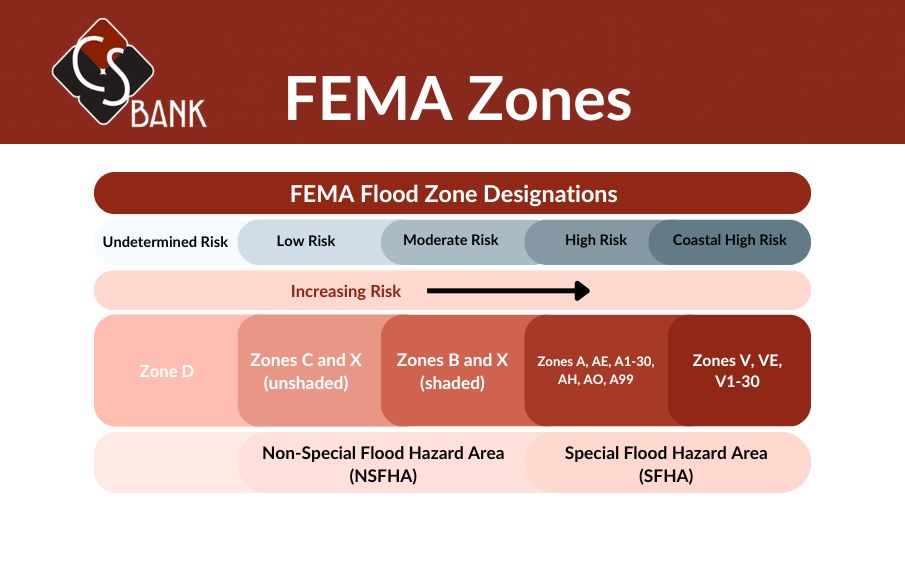
What Is a FEMA Flood Zone — and Why Does It Matter?
The Federal Emergency Management Agency (FEMA) has flood maps that designate the risks of flooding throughout the country. FEMA flood zone home buying means you’ll have to verify which zone a property is in, which indicates its level of risk and whether flood insurance is required to obtain a federally-backed mortgage.
FEMA flood maps are routinely updated, so it’s important to verify whether a property is in a flood zone rather than relying on (possibly) outdated information from a realtor. Of course, just because a property is in a flood zone doesn’t mean it’s ever flooded—and a property could have flooded in the past even if it’s not in a flood zone. You can check the flood zone of any property through an address search at the FEMA Flood Map Service Center.
FEMA’s flood zones are:
- A Zones: All A Zones have a high risk of flooding based on proximity to a body of water such as a pond, stream, or river. Flood insurance is mandatory for federally-backed mortgages.
- Zone B: Moderate flood hazard. Within the floodplain of lesser hazards, such as areas that are protected by levees or are shadow flooding areas with depths of less than one foot. Flood insurance is recommended but not required.
- Zones C: Minimal flood risk and above the 500-year flood level. May have local drainage issues or proximity to a pond that don’t warrant a detailed study or flood zone designation. Flood insurance is recommended but not required.
- Zone D: Flood risk has not been determined but could have flood hazards. Flood insurance is recommended but not required.
- Zone X (unshaded): Outside the 500-year flood level and protected from 100-year floods. Flood insurance is recommended but not required.
- Zone X (shaded): Moderate flood risk, between the limits of 100-year and 500-year floods. Flood insurance is recommended but not required.
- Zones V and VE: High-risk coastal areas with additional hazards from storm waves. Flood insurance is mandatory for federally-backed mortgages.
When Is Flood Insurance Required?
All federally-backed mortgages in the U.S. require flood insurance for properties that are within a Special Flood Hazard Area (SFHA). This includes loans backed by a government agency (Federal Housing Administration, Veterans Administration, etc.) or government-sponsored enterprises such as Fannie Mae and Freddie Mac.
Properties that are outside of FEMA flood zones can still be at risk. A 2022 analysis by the Washington Post revealed numerous floods happening outside of FEMA flood zones nationwide. A former FEMA official told The Post that flood maps reflected previous flood areas and were not meant to be a prediction of future events.
Increasingly severe weather events, driven by climate change, mean that more floods are happening outside of designated flood areas. FEMA is required to update its flood maps every five years, yet new maps take an average of seven years to complete. FEMA officials have told Congress that more than 40% of flood insurance claims between 2017 and 2019 were for properties outside of official flood zones.
This is why a lender might require flood insurance for properties that aren’t within a designated flood zone. Even if flood insurance isn’t required by a lender, it’s often worth carrying anyway based on local knowledge and the past history of flood events and insurance claims.
In 2025, the National Flood Insurance Program (NFIP) paid out hundreds of millions of dollars in flood claims across Arkansas last year, according to FEMA data — a reminder that flood losses are a regular occurrence in this region, not a rare exception.
Why You Might Need Flood Insurance in Arkansas
Arkansas frequently sees subtropical moisture flows from the Gulf of Mexico, according to the Encyclopedia of Arkansas. When they hit the Ozark Mountains, it leads to large, persistent thunderstorms. A combination of water-saturated ground, high flows on local rivers such as the Buffalo, Kings, and White, and heavy rains can trigger flash flooding, along with the risk of levee breaks, emergency dam releases, or dam failures. Beaver Lake’s dam near Eureka Springs helps manage flooding along the White River for Harrison, Eureka Springs, and nearby communities, but even it can’t absorb everything during the heaviest storms.
What Does Flood Insurance Actually Cost?
Flood insurance is a separate policy from your homeowner’s insurance, which does not cover the risk of floods, so you’ll need to factor this into your monthly housing costs before you make an offer to buy a home. The national average for NFIP flood insurance is about $950 to $975 per year, but it depends on your location, elevation, the type of foundation a building has, and its proximity to bodies of water.
Your cost will also depend on your deductible and how much coverage you need, such as whether you insure the building and its contents or just the building itself. Fannie Mae has a Flood Insurance Coverage Calculator that you can use to estimate the cost of flood insurance for one- to four-unit properties, including condominiums and co-ops. You can also get a free flood insurance quote from the NFIP. Depending on your location, private flood insurance might also be available and can be less expensive in some cases.
How Flood Zone Status Affects Your Mortgage
If you’re buying a home in a flood zone in Arkansas, your lender will require a flood elevation certificate before approving a mortgage, as this is mandatory for all FEMA flood zone home buying involving federally backed and conventional mortgages. The certificate is a document created by a licensed land surveyor, engineer, or architect that verifies the elevation of all buildings on a property. You might ask the seller if they have this document or see if your local county or municipal zoning office has this information. Otherwise, you’ll have to hire someone to survey the property and produce the certificate before you can obtain a mortgage.
While the flood insurance cost in Arkansas will add to your expense of home ownership, it could be more expensive if you fail to maintain flood insurance or if your lender determines that your level of coverage is inadequate. They could use force-placed insurance, where they buy a policy and add the cost to your mortgage payments. This can be significantly more expensive than if you had purchased a flood insurance policy on your own. You could also find out that the force-placed policy offers less coverage than you would like, so you’re better off keeping your flood insurance to comply with the law.
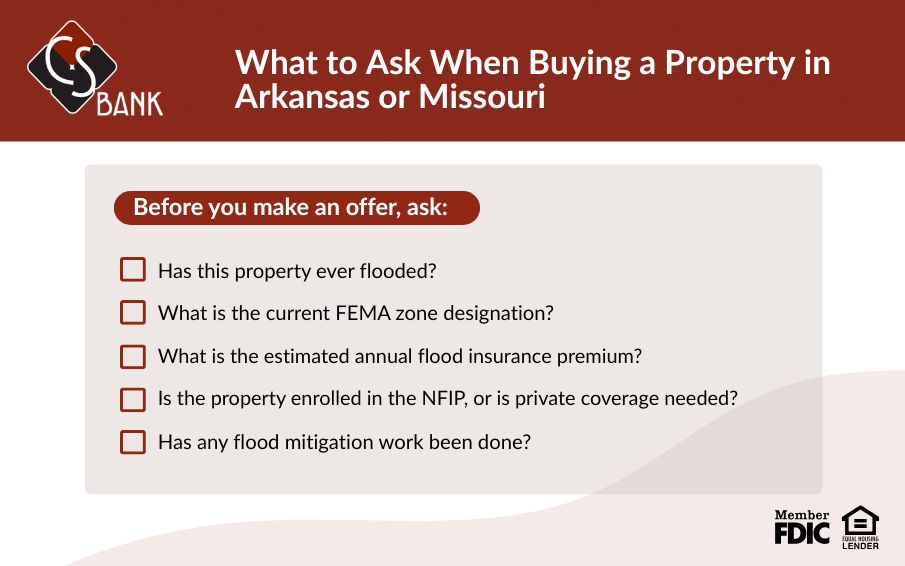
Questions to Ask Before You Make an Offer
Asking detailed questions about a property is important no matter where you’re buying a home, though it’s especially important if you’re buying a home in a flood zone in Arkansas. Questions include:
- Has this property ever flooded? (Ask for disclosure and check claims history)
- What is the current FEMA zone designation — and has it changed recently?
- What is the estimated annual flood insurance premium?
- Is the property enrolled in the NFIP, or would you need private coverage?
- Has any flood mitigation work been done (elevation, drainage improvements)?
Working with a Local Lender Makes a Difference
CS Bank's mortgage team knows the flood-prone areas in the region, and we understand the requirements of NFIP flood insurance in Arkansas, so we can help you anticipate documentation or flood insurance requirements to avoid unnecessary surprises. If you’re ready to explore a home purchase in Northwest Arkansas, please contact one of our mortgage lenders to get started.