

not featured
2025-11-11
11/11/2025
Mortgage
published
The Pros and Cons of Buying a Foreclosed Home
Buying a home is one of the biggest financial decisions you’ll ever make. For some buyers in Northwest Missouri and Arkansas, exploring foreclosed properties has become an appealing way to enter the housing market or grow an investment portfolio.
These homes can often be purchased below market value, creating opportunities for affordability and long-term equity. But before you jump in, it’s important to understand the unique advantages and challenges of buying a foreclosure.
This foreclosure property guide will help you weigh the opportunities and challenges before deciding. It will walk you through what foreclosure means, the pros and cons of purchasing one, and how you can approach the process with confidence.
What Is a Foreclosed Home?
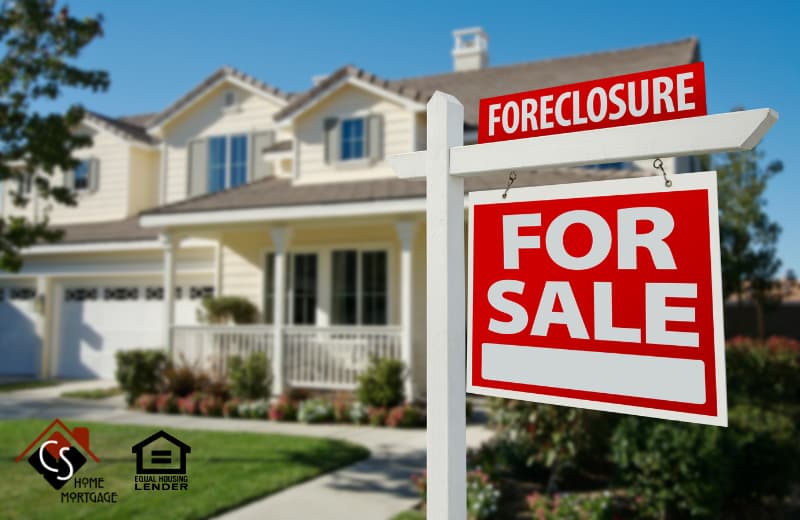
A foreclosure occurs when a homeowner cannot keep up with mortgage payments and the mortgage lender repossesses the property. To recover their losses, lenders sell these homes—sometimes through auctions, sometimes directly as bank-owned (also called REO, or real estate owned).
Because lenders are motivated to sell, foreclosed homes are often listed below market value. For first-time buyers, real estate investors, and budget-conscious families, that price tag can be attractive. However, foreclosures also carry risks, from needed repairs to title complications.
.jpg)
The Benefits of Buying a Foreclosure
1. Lower Purchase Price
The biggest draw is cost. Foreclosed homes are often listed below comparable properties in the same neighborhood, making them more affordable for buyers. Purchasing at a discount can create the potential for instant equity, especially when repairs or improvements raise the property’s value. For example, if a comparable home sells for $250,000 and you purchase a foreclosure for less, then invest in upgrades, the total cost may still come in below market value after renovations — leaving you with built-in equity from day one.
2. Opportunity for Investors
Foreclosures often attract real estate investors, including house flippers and rental property owners. Because many of these homes need updates, there’s room to add value through repairs and improvements. Some may even qualify for renovation financing or special loan programs, helping buyers spread out costs while enhancing the property’s worth.
3. Motivated Sellers
In this case, the “seller” is usually the bank or lender. They prioritize selling quickly and recovering losses, not maximizing profit. That motivation can create negotiating room on price, closing timelines, or concessions.
4. Less Competition from Traditional Buyers
Not every buyer is willing to tackle the extra work that foreclosures sometimes require. That hesitation can reduce competition compared to move-in ready listings, giving you more leverage to secure the property you want.
Apply for a Mortgage Today
The Drawbacks of Buying a Foreclosure
While foreclosures can provide value, they aren’t risk-free. Here are some of the challenges to weigh carefully.
1. As-Is Condition
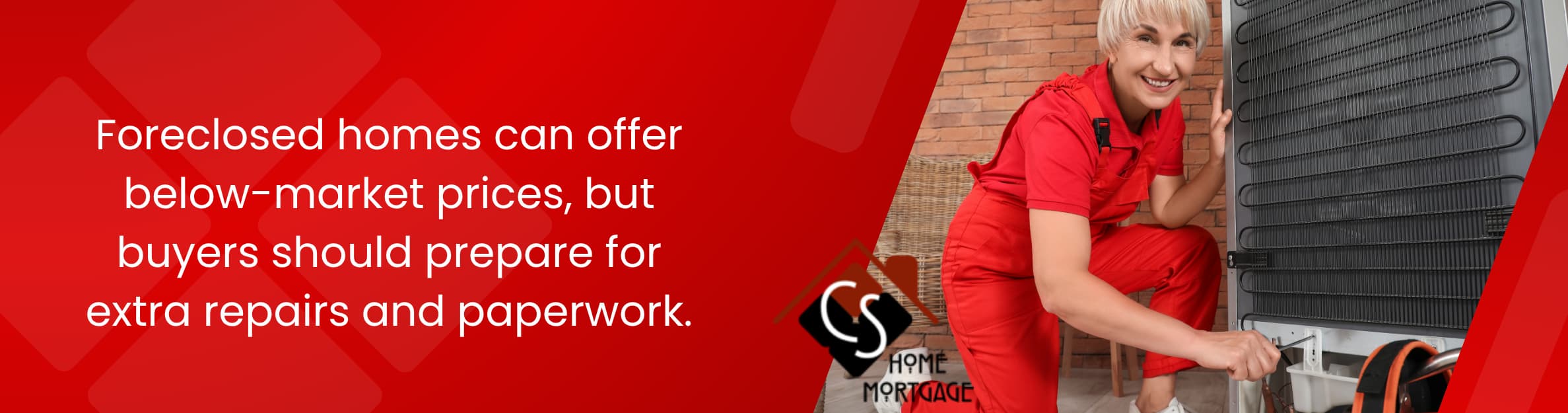
Most foreclosed homes are sold “as-is.” That means no one is fixing leaky roofs, replacing outdated wiring, or repairing water damage before you move in. Some properties may have been neglected for months. In some cases, they sit for years before hitting the market. The cost of necessary repairs can quickly eat into your savings.
2. Limited Ability to Inspect
In many foreclosure purchases, especially auctions, buyers have little to no opportunity to thoroughly inspect the property beforehand. Even when inspections are allowed, you may uncover hidden issues that weren’t visible at first glance.
This uncertainty can be stressful for first-time buyers. Without a clear picture of repair costs, budgeting becomes tricky.
3. Complicated Buying Process
Unlike a traditional home sale, buying a foreclosure often involves extra paperwork, longer timelines, or strict auction rules. For example, auctions may require a certified check or even cash payments up front, while REO sales often move at the bank’s pace. Patience and flexibility are essential.
4. Potential Legal or Title Issues
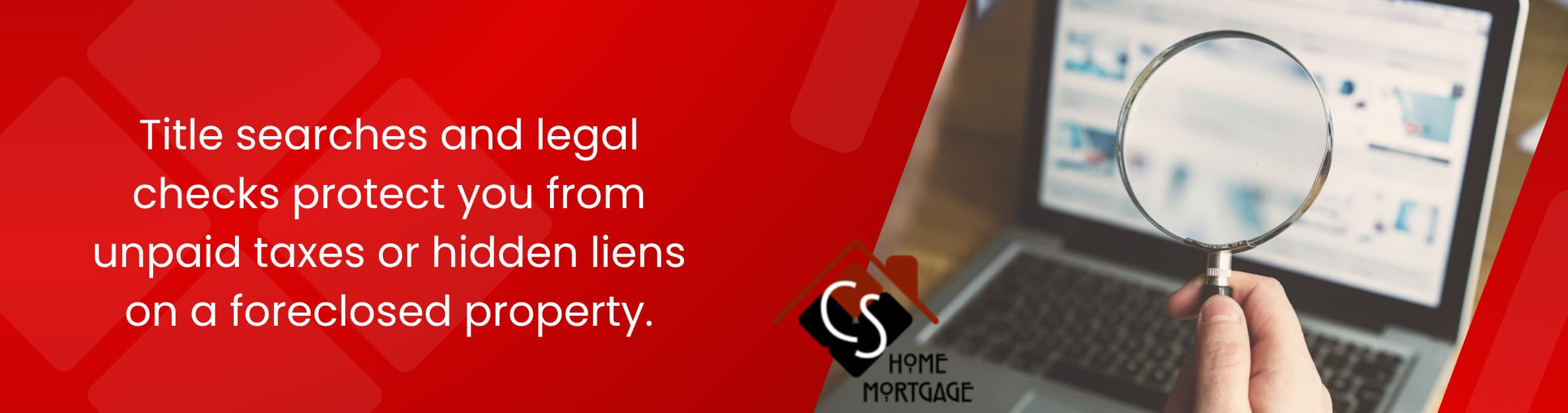
Sometimes properties come with unpaid property taxes, liens, or utility bills. These obligations don’t disappear when the lender forecloses, and the new buyer may end up responsible for them. Conducting a title search and securing title insurance are critical steps to avoid expensive surprises.
Tips for Buyers: How to Buy a Foreclosure with Confidence
If you’re drawn to the idea of buying a foreclosure, the right preparation can make the difference between a great deal and a money pit.
- Secure financing early. Before you start shopping, get preapproved so you know your budget and can act quickly when you find a property. CS Home Mortgage’s home loan options can help you explore financing tailored to your needs.
- Work with an experienced agent. Not all real estate agents have handled foreclosures before. Find someone who understands the process and can help you navigate bank negotiations, auction rules, and paperwork.
- Plan for repairs. Even if you land a great deal, you’ll likely need to invest in updates. Set aside funds for both expected and unexpected costs. Plan ahead by creating a budget that covers potential repairs and legal expenses, such as attorney fees or title-related costs.
- Do your research. Whenever possible, inspect the property or at least tour the home. For tips on what to look for, check out our guide to touring an open house like a pro.
- Protect yourself legally. Always run a title search and consider working with a real estate attorney to ensure you’re not taking on hidden debts.
.jpg)
Who Should—and Shouldn’t—Buy a Foreclosure
Foreclosures can be an excellent fit for:
- First-time buyers who want to stretch their budget, provided they have savings for repairs. A foreclosure can create a pathway to homeownership sooner than expected for someone who has been priced out of the traditional market. The key is being realistic about the added maintenance costs and setting aside an emergency fund for surprises.
- Investors seeking long-term rental opportunities or short-term renovation projects. In Northwest Arkansas and Missouri, demand for rentals in areas like Fayetteville, Bentonville, and Cassville continues to rise, driven by both local economies and college-town populations. Foreclosures allow investors to acquire properties at a discount, renovate them, and build steady rental income.
- Budget-conscious families are willing to handle a little extra work for a lower entry price. Families who don’t mind putting in sweat equity may take on tasks like painting rooms, fixing minor repairs, or upgrading outdated features. This effort can make it possible to move into neighborhoods that otherwise would have been out of reach.
They may not be the best option for buyers who:
- Need a move-in-ready home without the risk of surprise repairs.
- Have little flexibility in the budget or timeline. Foreclosures can move quickly in some cases and drag out in others.
- Are already managing major financial commitments, such as student loans (see our blog on navigating mortgages and student loans). In these situations, the unpredictability of repair costs could create more stress than opportunity.
Is a Foreclosure Right for You?
Like most things in real estate, the answer depends on your situation. Buying a foreclosed home can be a smart way to save money and build equity faster. Still, it also requires patience, financial readiness, and a willingness to take on potential repairs.
If you’re curious about the possibilities, the first step is to connect with a trusted lending partner who can explain your options.
Take the Next Step with CS Home Mortgage
At CS Home Mortgage, we’re here to help buyers in Northwest Missouri and Arkansas weigh the pros and cons of foreclosure homes and explore financing that fits their goals. Whether you’re a first-time buyer trying to stretch your budget or an investor looking for your next property, our team can guide you through every mortgage process stage.
Ready to learn more? Contact CS Bank today to explore your financing options and determine whether buying a foreclosure is the right move for you.