

featured
2026-06-18
6/18/2026
Mortgage
published

How to Automate Your Way to a House Down Payment
Scrolling through TikTok or Instagram can make you feel like buying a home will be impossible. One video says you need a six-figure salary. Another claims you should already have $50,000 saved before even speaking with a lender. For many renters and young professionals across Arkansas and Southern Missouri, the entire process can feel out of reach before it even starts.
But learning how to save for a house doesn’t have to mean extreme budgeting or putting your life on hold for years.
Automation just might be your secret weapon. While an automated savings app can help some savers build momentum, you may not need another tool to get started. A simple auto-save from every paycheck can move money toward your future in the background. Small, consistent actions often create stronger long-term results than occasional big pushes.
If you are looking for practical first-time home buyer tips, this guide breaks down a simple “auto-save from every paycheck” that can help you start building a down payment fund that saves automatically and brings homeownership within closer reach.
Why Manual Saving Fails
Let’s face it, waiting until the end of the month to save “whatever is left over” almost never works. Bills hit, someone suggests dinner out, and suddenly any extra money is gone before it reaches savings.
The better strategy is to reverse the order entirely. Instead of saving what is left after spending, start spending what is left after automatically saving.
When part of your paycheck moves directly into savings before it lands in your checking account, your brain adjusts surprisingly quickly. If the money never appears in your primary spending balance, you are less likely to think of it as available cash.
That is what makes automation so effective. Rather than relying on motivation every month, you create a system that builds your house fund in the background while you continue living your life.
The “Lifestyle Creep” Audit
Before setting up automatic savings, it helps to figure out where small leaks are happening in your budget, especially if you are budgeting in your 20s and trying to balance rent, bills, student loans, social plans, and long-term goals.
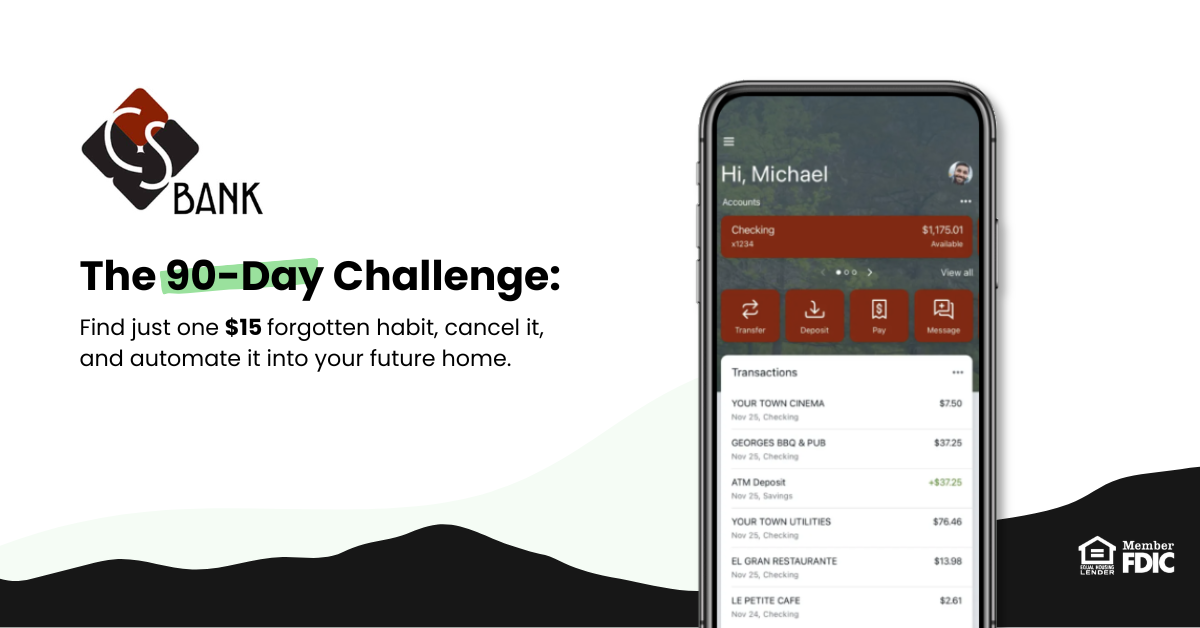
Lifestyle creep happens when convenience spending slowly becomes the norm. A few delivery fees here, a forgotten subscription there, and suddenly hundreds of dollars disappear without much thought.
Try this simple three-month audit.
Log into CS Bank Digital Banking and scroll through the past three months of transactions. Look specifically for:
- Food delivery apps
- Streaming subscriptions
- Auto-renew memberships
- Impulse online purchases
- Daily convenience spending
You don’t need to eliminate everything overnight. Instead, pick one recurring expense to reduce this month. Maybe it’s a $15 streaming service you barely use or cutting back on weekly delivery orders. Then redirect that exact amount into savings automatically. This creates a powerful shift. Instead of “losing” money to budgeting, you are reassigning money toward something meaningful.
Step-by-Step: The Auto-Save from Every Paycheck
Step 1: Split Your Payroll Direct Deposit
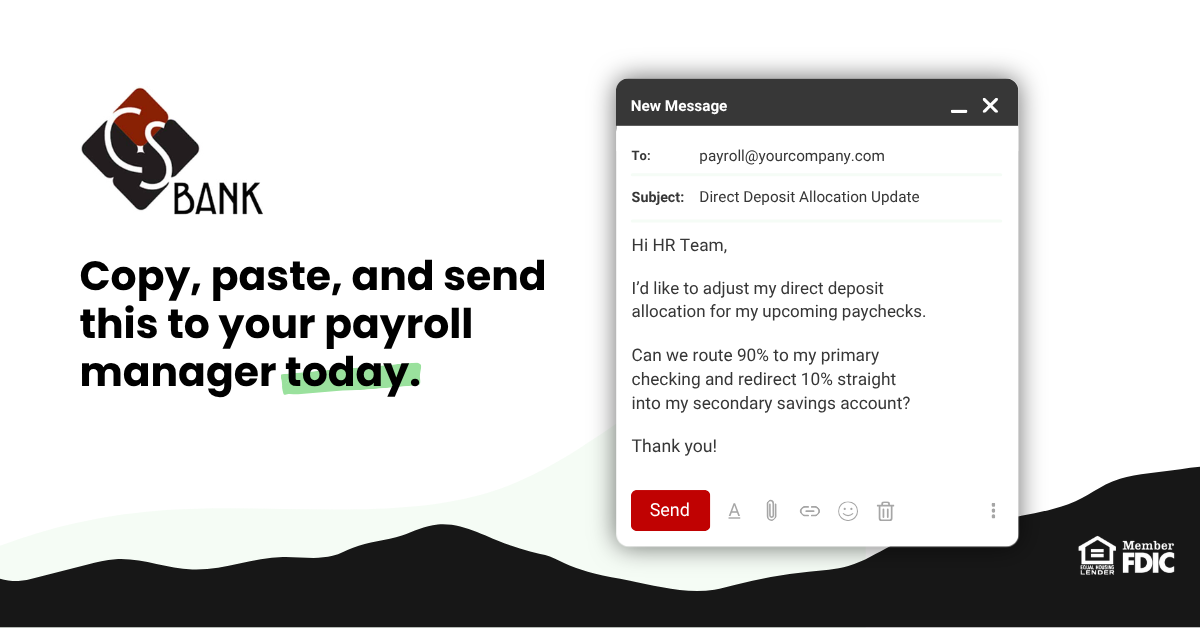
Instead of depositing 100% of your paycheck into one checking account, divide it automatically. For example, 90% goes to your everyday checking account, and 10% goes directly into savings. Because the transfer happens before the money reaches you, saving becomes automatic.
A dedicated savings account like CS Bank NextGen Saver can help younger savers separate long-term goals from daily spending.
Step 2: Isolate Your House Fund
When your down payment money sits next to your everyday spending balance, it becomes easier to dip into it for vacations, shopping, or emergencies. Instead, move it into a separate account dedicated entirely to your future home.
Opening a dedicated account from these CS Bank Savings Options creates a stronger mental boundary around that money. The less accessible it feels, the more protected it becomes.
Step 3: Name the Goal
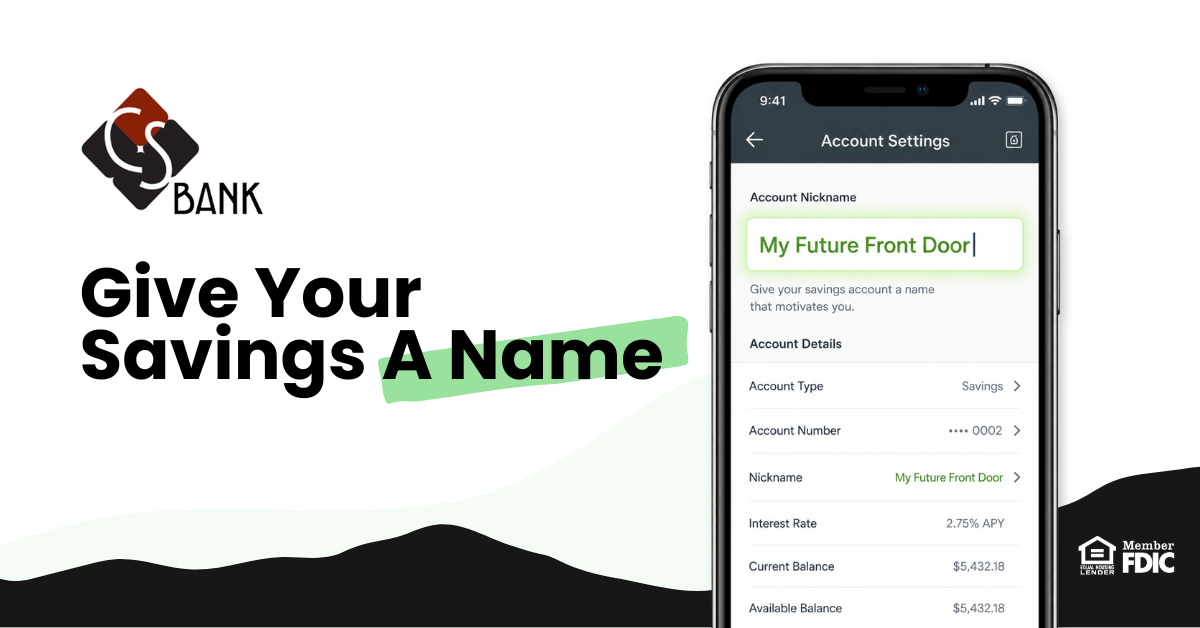
This sounds small, but it works. Inside your banking app, rename the account something motivating instead of leaving it as “Savings 002.”
Examples:
- Apartment Exit Fund
- House Keys
- First Home Fund
Giving the account a visual identity creates a stronger emotional connection and adds a little extra accountability.
Make Your Savings Work Harder
Higher-yield savings options and short-term CDs can help your money grow passively while you contribute consistently. Even modest interest earnings create momentum over time. That is why a high-yield savings account is worth considering when you are saving for a first home.
You can estimate how consistent deposits may grow by using the CS Bank Compound Savings Calculator. And importantly, remember this: You may not need a 20% down payment.
Many first-time buyer programs allow qualified buyers to purchase with down payments closer to 3% or 3.5%. That means homeownership may be far more realistic than social media makes it seem. If you want to explore financing options or talk through realistic savings goals, CS Bank Mortgage Lenders can help explain available paths for first-time buyers.
The Rules of Engagement
One of the biggest challenges with saving for a house is protecting the account from yourself.
A house down payment fund is not the same thing as an emergency fund. If car repairs, medical bills, or unexpected expenses pop up, pulling money from your future home savings can wipe out months of progress almost instantly.
That is why it helps to create two separate accounts: one for emergencies and one for your house down payment. The emergency fund absorbs short-term surprises, while the house fund stays focused on the long-term goal of buying your first home.
Small Habits Can Build Real Momentum
Financial independence usually is not built through massive lifestyle sacrifices or perfect budgeting. It is built through smart financial habits that make saving easier to repeat.
If you are ready to start learning how to save for a house, keep it simple:
- Set up an automatic transfer from every paycheck through your employer’s payroll system
- Open a dedicated savings account for your house fund
- Create separate savings buckets for emergencies and long-term goals
- Automate consistent deposits and let time do the heavy lifting
Ready to start? Open a dedicated savings account online with CS Bank, set up your automatic deposits, and start turning your first-home goal into a habit.