


not featured
2026-07-15
7/15/2026
Fraud Prevention
published
.jpg)
When the Panicked Call From Your Grandchild Is Really an AI Scam
AI-powered grandparent scams are increasing at an alarming rate, with scammers scouring social media and the internet for information they can use to rip people off. Using just a few seconds of audio, they can create an AI voice scam that sounds just like one of your relatives. They frequently target grandparents, posing as a grandchild or another family member who needs financial help.
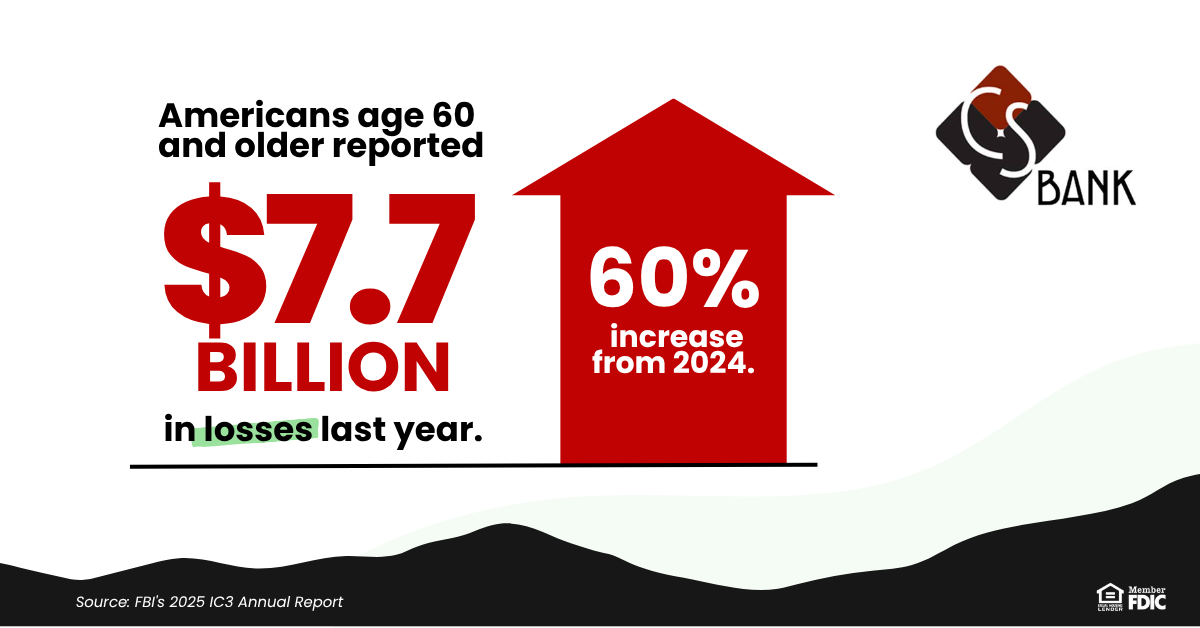
These kinds of grandparent scams are having a tremendous impact. Americans age 60 and older reported $7.7 billion in losses from scams last year, according to the FBI’s 2025 IC3 Annual Report. This represents a 59 percent increase from the roughly $4.9 billion older adults lost in 2024. Those in their 30s and 40s reported $4.6 billion in losses.
Most of that money is lost through social engineering, not computer hacking. In 2025, cyber-enabled fraud (scams that trick people into sending money or handing over account access) made up about 85 percent of the $20.9 billion Americans reported losing to online crime. And for the first time, the FBI tracked fraud involving AI as its own category, with more than 22,000 complaints and nearly $893 million in reported losses. The FBI says even that number is likely an undercount, because victims often can’t tell when a voice, photo, or message has been faked with AI. Social media hands scammers the raw material, such as names, photos, and short voice clips, and AI turns it into a believable impersonation within seconds.
How the Modern Grandparent Scam Works
Scammers need just a few seconds of audio of someone speaking to impersonate them. They might obtain a voice sample from social media, by hacking into someone’s voicemail, or even from customer service calls. They might try calling someone and get them to talk long enough so they can copy their voice. They can also create spoofed phone numbers that look like a call is from someone you know, along with their picture that they pulled from social media.
They call a grandparent, pretending to be a grandchild in need of immediate help. Scammers try to create a sense of urgency to get people to act without thinking or taking the time to verify the information or contact someone. They typically offer some kind of excuse for why the grandparent shouldn’t call someone else. The “grandchild” might beg the grandparent to “please don’t tell my parents.” In some cases, one of the scammers will threaten bodily harm against the grandchild unless the grandparent acts immediately. Here are a few examples of AI voice cloning scams.
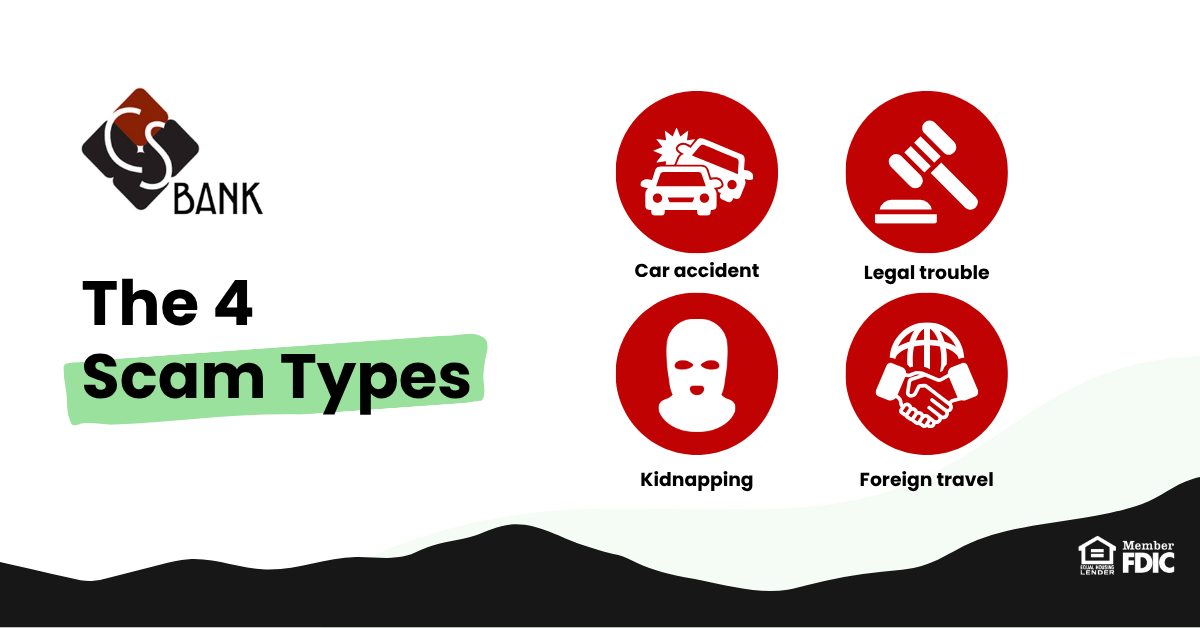
The Car Accident Scam
Someone calls a grandparent, pretending to be their grandchild, and says they’ve just been in a terrible car accident and need money immediately for car repairs, medical bills, legal fees, and fines, or all of the above.
The Legal Trouble Scam
A grandparent receives a call from a “grandchild” who claims they were just arrested for a crime and need bail money and a lawyer. In some cases, the “grandchild” might have someone else pose as a lawyer who says they can help the grandchild and get them out of jail in exchange for a large amount of money. This scam is sometimes used in conjunction with the car accident scam.
The Phony Kidnapping Scam
A scammer, posing as a grandchild, calls a grandparent and claims they were kidnapped. They might turn the call over to a “kidnapper” who tells the grandparent to pay them a large amount of money and threatens the life of the grandchild.
The Foreign Travel Scam
Scammers can pull information from social media to find people who are traveling overseas. They pose as the traveler and call a grandparent, claim there’s some kind of problem, and ask the grandparent to send money immediately. Their claims may involve a medical emergency, a problem with immigration, being the victim of a crime, or some kind of legal issue.
Why AI Voice Scams Work
These kinds of grandparent scams are effective because they play on someone’s emotions. After all, who wouldn’t want to help their grandchild in an emergency? Scammers use that emotional tug and a sense of urgency to get their victims to act without taking the time to think about the request or to verify if the call is legitimate.
The Same Playbook Beyond Grandparents
Grandparent scams are one version of a much larger pattern. The same social engineering shows up in romance and friendship scams, where someone builds trust over weeks or months, and in urgent pleas to help a “friend of a friend” who is supposedly stranded overseas and needs money to get home. The story changes, but the playbook is the same: build a connection, invent an emergency, and push for a fast payment that is hard to undo. Wire transfers, gift cards, and cryptocurrency are favorites for exactly that reason, since the money is very difficult to recover once it is sent. If someone asks you to wire money to help a person you have never met, treat it as a red flag, slow down, and verify the story on your own before sending anything.
How to Spot AI Voice Cloning Scams
While voice cloning grandparent scams are getting harder to spot, there are some key signs to watch for. Scammers will want you to act immediately. The caller will pressure the grandparent into sending money right away, and they typically ask for unusual payment methods. They might tell the victim to withdraw a large sum of money from their bank and pay them in cash, either by meeting in person or by the scammer sending a “courier” to the victim’s home.
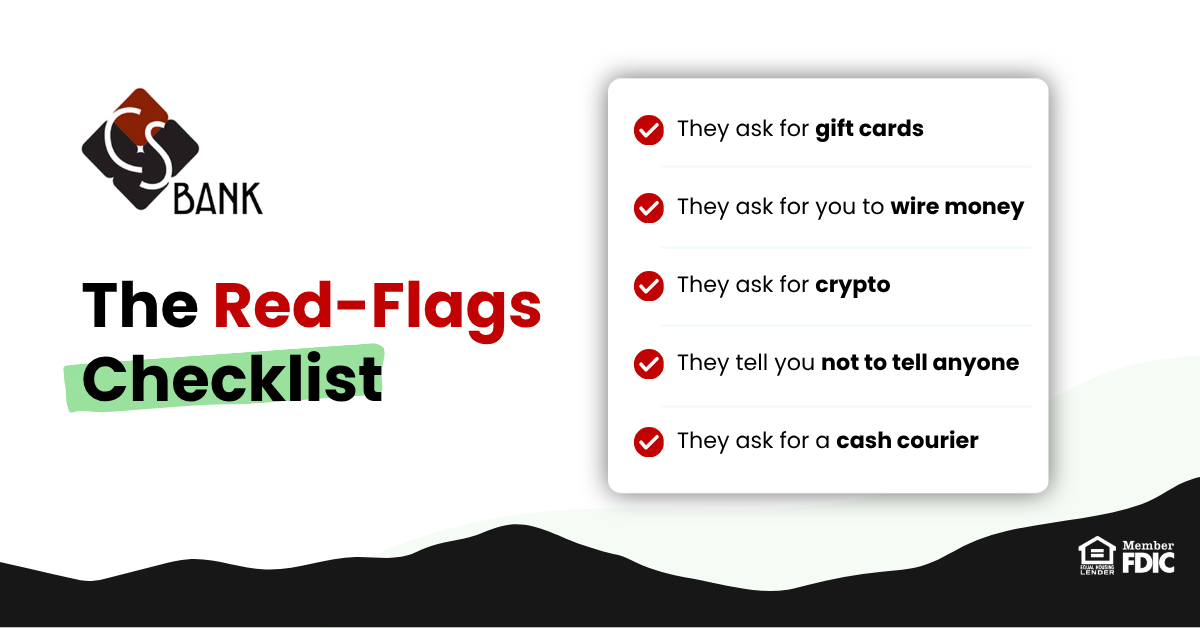
Scammers might tell the grandparent to purchase numerous gift cards and call them with the information. They could also tell their victim to send the money through a wire transfer or money order and to lie to their bank or the store about the reason for the transaction. They could also demand money through a mobile payment app and offer to “help” the victim through the process. Not only would the scammer receive the payment, but they could also gain access to the victim’s bank accounts.
How to Avoid AI Scams
The first step to avoiding AI grandparent scams is to speak with your family about being careful with what they share on social media and online. They might consider using privacy options on their social media accounts to make it harder for scammers to steal their images and voices, or to gather the information they need to impersonate someone.
Have a Safe Word or Phrase
Your family might agree on a safe word or a phrase that you could all use to confirm each other’s identity. It should be something that only a family member would know and something that sounds like it’s part of a normal conversation. Things like addresses, former addresses, or the name of a family pet would be too easy for a scammer to know. Another approach would be to ask the caller something that isn’t on social media and that only your actual grandchild would know. This might be something about the last meal you had together, what you talked about, or an old family story.
Verify the Information
If you do receive a phone call about a family “emergency,” take the time to verify the information. Start by looking at the phone number that the caller is using, but keep in mind that scammers have ways of spoofing their number, so it looks like it’s coming from one of your relatives. Sometimes, a spoofed number might have the same area code as your grandchild and have their picture appear, so it looks like it’s coming from one of your contacts.
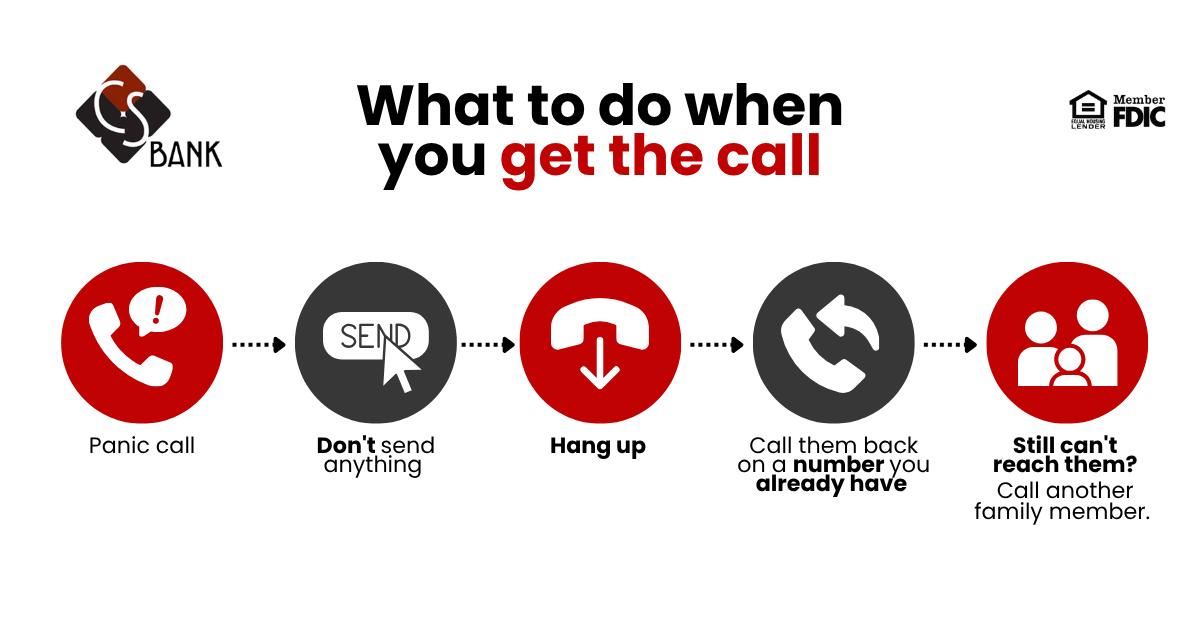
Write down their number and any information they offer. If the “grandchild” says an attorney or police officer is involved and turns the call over to someone else, write down that person’s name and all their information. You could then search online to try to verify someone’s identity, although they could be misusing the name of a real attorney or police officer. Try calling the police station or the law office that the “police officer” or “attorney” claims to represent—but don’t use the number they give you over the phone or the one that appears in their caller ID. Take the time to find a real phone number on your own.
Call a Family Member or Friend
Even if the caller begs you to “please don’t call my parents,” you should take the time to verify the situation. You could call the parents or another family member who could help you figure out what’s happening. You could hang up and call your grandchild back at their actual phone number, not the one the scammer just called you from. You should also resist the urge to act immediately, and don’t send money to anyone unless you’ve taken the time to make sure that the request is for real. If you can’t reach a family member immediately, try calling your local police department or someone else you can trust.
Don’t Reveal Personal Info or Make a Rushed Decision
You should also refuse to give any personal information to someone who calls you unexpectedly. They might ask you to “verify” your name and address, Social Security number, or bank account information that they could use to steal your funds. Above all else, avoid making a rushed decision and take the time to reach out to someone else so they can help you avoid getting scammed.
How to Respond to AI Voice Cloning Scams
If you believe you’re the victim of an AI grandparent scam, or any other kind of scam, you can contact the National Elder Fraud Hotline by calling 833–FRAUD–11 or 833–372–8311. You can also contact your state’s authorities. In Arkansas, you could contact the Arkansas Department of Human Services’ Fraud Hotline at 800-422-6641 or email ContactDHSFraud@arkansas.gov. In Missouri, fraud victims can contact the Missouri Attorney General’s Consumer Protection Hotline at 800-392-8222. You can also fill out a complaint online or email consumer@ago.mo.gov.
We’re Here to Help You Keep Your Accounts Secure
If you have any reason to believe you could be the victim of any kind of grandparent scam, you’ll need to act quickly. Please contact your local CS Bank in Harrison, Berryville, Eureka Springs, Huntsville, AR, or Cassville, MO, so we can help you protect your accounts and reduce your chance of additional losses.